 Stolen Art Dealer
Stolen · 20 October 2026
A Léger confiscated from Galerie Paul Rosenberg and restituted after the war
Christie's provenance says Léger's 1918 Les deux acrobates was confiscated from Paul Rosenberg's Paris gallery during the German occupation and later restituted to him.
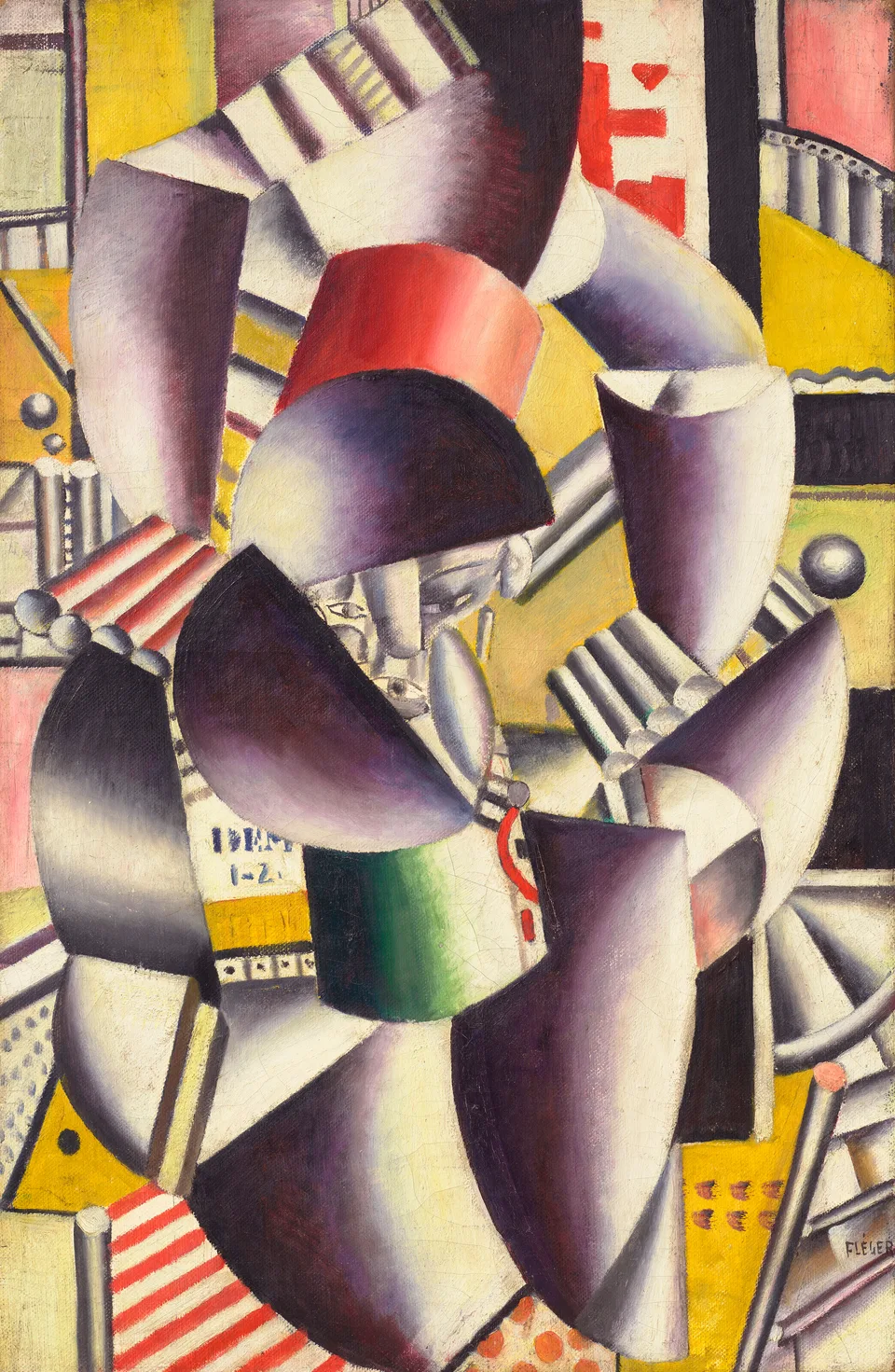
By 1927 Fernand Léger’s Les deux acrobates belonged to the Galerie Paul Rosenberg in Paris. According to Christie’s provenance, the painting was confiscated from that gallery after Germany occupied France, which began in May 1940. It was restituted to Paul Rosenberg in New York at some point after 1945. Christie’s gives no more exact dates and does not say who took the painting, where it was held or how it was found.
Léger painted it in 1918, an oil on canvas of 89.3 by 58.3 centimetres. Christie’s lists it as number 113 in Georges Bauquier’s catalogue of his paintings, and calls it the upright one of three acrobat compositions he made that year. A different dealer, Léonce Rosenberg, bought it from the artist on 11 October 1918 and showed it at his Paris gallery in February 1919.
Other records describe what happened to Paul Rosenberg’s collection. A history published by BNP Paribas says he left France for the United States in 1940. Before that he had placed 162 paintings in a bank vault at Libourne, near Bordeaux, and German authorities obtained them between 21 April and 6 May 1941. The same history says he was robbed of nearly 400 paintings in three thefts, that he recovered some after the war with the help of an art recovery commission, and that around 60 were never found.
None of the sources read for this entry names Les deux acrobates in those events. The link between this painting and the vault, or any of the three thefts, is therefore not established. What the record does support is Christie’s statement of confiscation and restitution.
After its return the painting was owned by E.V. Thaw and Company in New York, then by Heinz Berggruen in Paris, and by Norman and Grete Granz in Geneva by 1970. It appeared in the Granz sale at Christie’s New York on 6 November 2002 as lot 41. Christie’s offered it again on 12 May 2022, from a private West Coast collection, with an estimate of 8 to 12 million dollars. The lot page lists a price realised of 14.13 million dollars. It does not say whether that includes the buyer’s premium, and the sources consulted do not name the buyer.