 Stolen Art Dealer
Stolen · 22 October 2026
The Van Gogh Museum robbery of 1991
Two armed men took 20 Van Gogh paintings from the museum in Amsterdam on 14 April 1991. Police found all 20 in a car 35 minutes after the alarm.
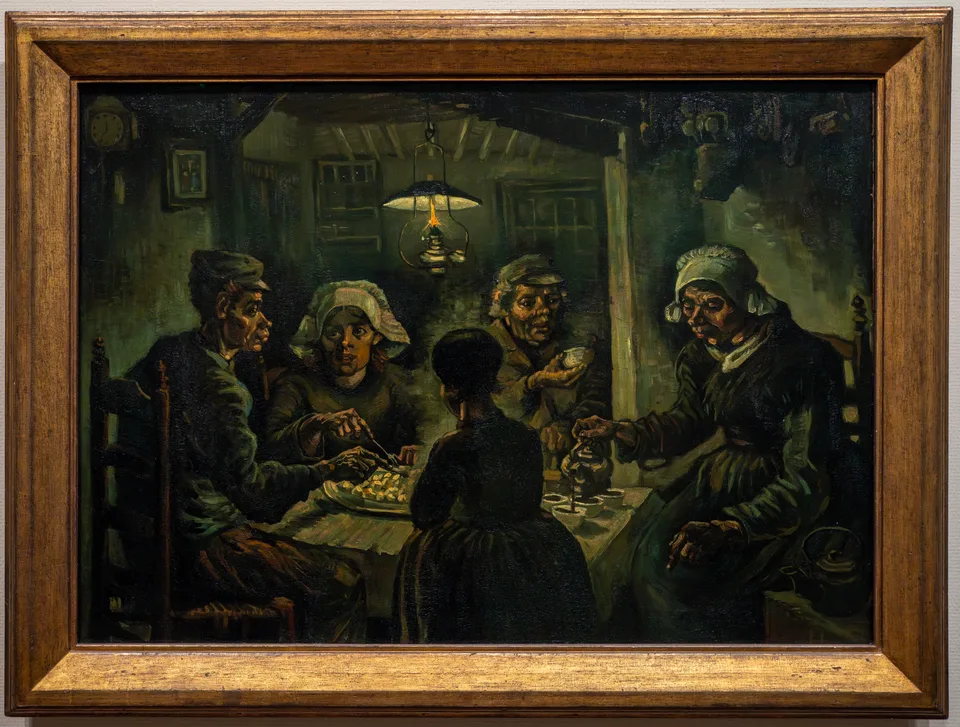
At about three in the morning on Sunday 14 April 1991, two armed men in masks held up the two guards on duty at the Van Gogh Museum in Amsterdam. One of the men had stayed hidden in the building after it closed at 5 p.m. on Saturday. Sources differ on where he hid. The guards were made to switch off the infrared alarm and other systems. They told police that the men spoke English with an American accent.
The guards said the men took about 45 minutes to choose their paintings. They took 20 works by Vincent van Gogh out of their frames and packed them into two garment bags. Then they drove away in a Volkswagen Passat that belonged to one of the guards. The New York Times reports that the guards raised the alarm with police at 4:48 a.m., a minute after the men had gone.
At 5:23 a.m. police found the car at Amstel railway station, about 1.5 miles from the museum. All 20 paintings were in the bags. That is 35 minutes after the alarm, not after the thieves left. The men had left the paintings behind, and on the day nobody could say why. In July police said a second car, due to meet the two men, had a flat tyre and never came. This is the police account. The sources give no court finding on it.
The paintings were damaged. All 20 were scratched. Three were badly torn when pushed into the bags: Wheatfield with Crows, Still Life with Bible and a still life of fruit. Ronald de Leeuw, the museum’s director, said works in worse condition had been restored before. The works were not insured, because state museums spent their money on security instead of premiums. The Dutch news agency ANP called it the largest art theft in the Netherlands since the Second World War. El Pais reports that the paintings were back at the museum that afternoon.
Police made their arrests in July 1991. On Monday 15 July they took in a guard who had been on duty that night and a former employee of the museum’s security firm. Both were accused of giving away security details. The two men who took the paintings were arrested on Wednesday 17 July, and on 18 July police announced that four Dutch men were held. Dutch police and press named the four by initials only, and this account gives no names. The guard in the plot had been locked in a storeroom by one of the thieves, so that he looked like a victim. The other guard, an older man, was not suspected.
On 31 October 1991 the Amsterdam district court convicted all four. The guard on duty, who was 24, received five years. Prosecutors had asked for eight years for each man. The court blamed profit as the motive and the guard’s breach of trust. On appeal in 1992 the court raised the sentences to about six years, as reported.
The museum ended its contract with the security firm that had guarded it since 1972. From October 1991 the Dutch state security service took over. NRC reported that it stayed unclear why at least three quarters of an hour passed between the alarm system going off and the control room warning police. All 20 paintings are in the museum’s care. The sources do not describe the repairs. The Art Newspaper counted 50 Van Goghs stolen since 1958 in January 2025, and says all but four have been recovered.
Sources
- The New York Times: report on the failed Van Gogh theft (15 April 1991)
- AP: report on the arrests in the Van Gogh theft (18 July 1991)
- AP via the Los Angeles Times: report on the recovered Van Gogh paintings (15 April 1991)
- Los Angeles Times: report on the Van Gogh theft arrests (19 July 1991)
- El Pais: report on the recovery of the Van Gogh paintings (15 April 1991)
- ANP via Digibron: report on the sentences in the Van Gogh theft (1 November 1991)
- NRC: report on the museum's new security firm (18 September 1991)
- NOS: Van mislukte vlucht tot spoorloze buit, vijf spraakmakende kunstroven in Nederland (2024)
- The Art Newspaper: How many Van Goghs have been stolen and where are they now (31 January 2025)