 Stolen Art Dealer
Stolen · 22 October 2026
The Veit Stoss altarpiece, taken to Nuremberg
In October 1939 the Germans took the carved figures of Kraków's great Gothic altarpiece. American officers found them in Nuremberg in 1945, and the altarpiece came home in 1946.
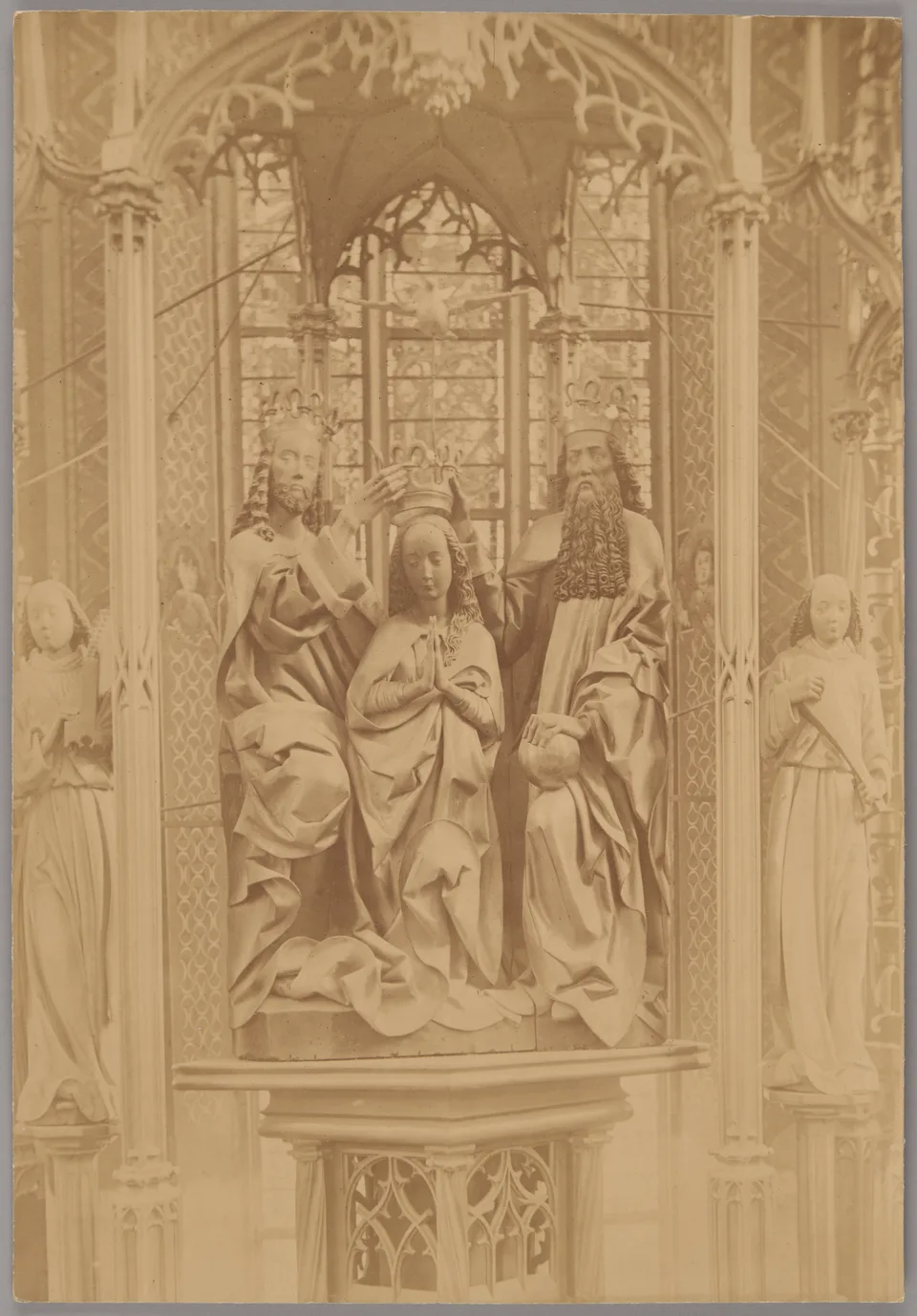
On 1 October 1939, three furniture trucks stopped in Sandomierz, a town in southern Poland. German men loaded 32 crates from the cathedral and the diocesan seminary. The crates held the carved figures of the high altarpiece of St Mary’s Church in Kraków. The Polish Ministry of Culture says the trucks were sent by Peter Paulsen, an SS archaeologist who led a unit set up to take Polish art.
Veit Stoss (Wit Stwosz in Polish) was a sculptor from Nuremberg. He made the altarpiece between 1477 and 1489. It stands about 13 metres high and 11 metres wide with its wings open. Its main scene shows the Dormition of the Virgin with the twelve apostles.
The Poles had tried to save it. Karol Estreicher, a Kraków art historian, had planned an evacuation before the war. It began on 15 August 1939. The figures were taken down and packed into 30 crates. The great cabinet stayed in the church, because nobody thought it could be stolen. On the night of 28 August the plan changed, and the crates went to Sandomierz. They arrived on 1 September, the day the war began.
Hitler decided that the altarpiece should go to Nuremberg, the artist’s home city. The ministry reports that the mayor of Nuremberg agreed this with Hans Frank, the Governor-General of occupied Poland. Frank tried to keep works in Poland. His office listed the altarpiece among 521 works it called “secured”. Hitler did not change his decision. Frank was convicted by the International Military Tribunal at Nuremberg on 1 October 1946 and executed on 16 October. The figures may have passed through a Berlin bank vault. German army engineers took down the cabinet in about five days. By the ministry’s account, it reached Nuremberg in March 1940, though that date is soft.
The altarpiece was stored in a cellar below Nuremberg castle, in Obere Schmiedgasse. The ministry quotes one post-war witness who says that the office of Albert Speer, Hitler’s chief architect, gave written orders for the storage. Speer was convicted by the International Military Tribunal in 1946 and sentenced to 20 years. His link to the altarpiece rests on that one witness.
American forces took Nuremberg in 1945. On 13 June, Estreicher noted a tip from the US Military Government about the cellar. American officers of the Monuments, Fine Arts and Archives programme took charge of its contents. The return was delayed. The Polish government in exile argued that the altarpiece belonged to the Church and not the state. The Americans kept their decision to give it to Poland and waited until spring 1946. A special train of more than twenty cars left Nuremberg early on 28 April 1946, guarded by 13 American soldiers. It reached Kraków on the evening of 30 April. It also carried Leonardo’s Lady with an Ermine.
Conservators at Wawel Castle worked on the altarpiece from 1946 to 1949. They found the damage was not severe, and they removed later repainting. The state then kept the sculptures on show at Wawel. The conservation journal Ochrona Zabytkow argues, with the word “probably”, that this was indirect pressure on the Church. After the political change of October 1956, the figures went to the parish on 12 and 13 April 1957. A second conservation, finished in February 2021, found the date 1486 on the figure of St James the Elder. The altarpiece is on the high altar of St Mary’s Basilica. The church says that nine panels by Hans Suess von Kulmbach, taken by the Nazis, and three by Michael Lancz von Kitzingen, are still missing.
Sources
- Polish Ministry of Culture, Lost Works: report on the wartime fate of the Veit Stoss altarpiece, the American episode (undated)
- Institute of National Remembrance (IPN): report on the return of looted art to Kraków in 1946 (undated)
- St Mary's Basilica: report on the altar of Veit Stoss (undated)
- St Mary's Basilica: report on the renovation of the altar of Veit Stoss (undated)
- St Mary's Basilica: report on wartime losses (undated)
- Ochrona Zabytkow, 1992: Walczy, article on the altarpiece after the war (abstract)
- Ochrona Zabytkow, 1949: Slonecki, article on the conservation of the altarpiece
- Avalon Project: Judgment of the International Military Tribunal, Nuremberg (1946)
- National Gallery of Art archives: Everett Lesley papers, finding aid