 Stolen Art Dealer
Stolen · 22 October 2026
The Spanish paintings in Joseph Bonaparte's coach
Taken from the French king's baggage at Vitoria in 1813, the paintings stayed with the Duke of Wellington after Spain's court declined to take them back.
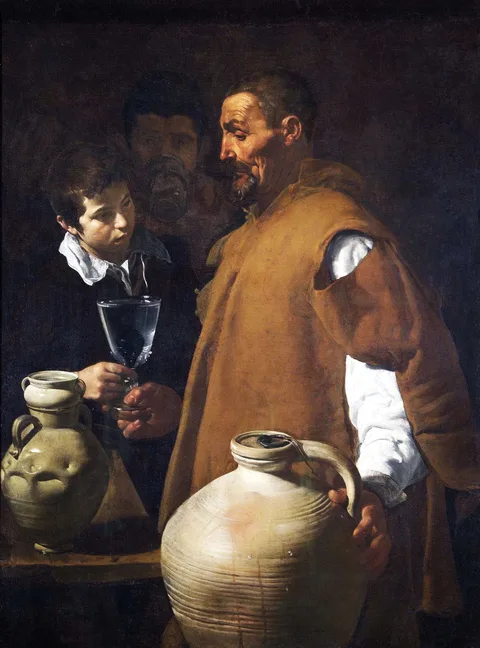
On 21 June 1813 the British army under Arthur Wellesley, Duke of Wellington, beat the French at Vitoria, in northern Spain. The battle ended French rule in Spain. Joseph Bonaparte, Napoleon’s brother and King of Spain since 1808, escaped under cavalry protection. He left his baggage behind.
English Heritage, which runs Apsley House in London, says paintings from the Spanish Royal Collection were taken from that baggage. Its word for the act is “rescued”. Susan Jenkins, writing in the English Heritage Historical Review in 2007, describes the pictures as looted by Joseph. No court or criminal process is recorded for him.
The English Heritage catalogue of 2009 reports that Joseph’s coach held state papers, love letters, a silver chamber pot and more than 200 paintings. They had been taken off their stretchers and rolled. Wellington sent a large trunk of them to his brother William, Lord Maryborough, in London. He wrote that the pictures “were not thought of any value”. Some had been used as tarpaulins over baggage on mules.
Maryborough had the pictures listed by William Seguier, a picture dealer and restorer who later became Keeper of the National Gallery. On 9 February 1814 he sent a catalogue of 165 pictures. They were worth about 40,000 pounds, by Charles Bagot’s estimate, which Maryborough thought too low. Wellington at first thought the pictures might have been robbed in Italy, not Spain. On 16 March 1814 he told his brother Sir Henry Wellesley, British Minister in Spain, that he wished to return any that belonged to the King.
Sir Henry Wellesley raised the matter at the Spanish court, but no reply came. Ferdinand VII had been restored as King of Spain in 1814. In September 1816 Wellington wrote again, to Count Fernán Núñez, the Spanish Minister in London. Núñez sent back what he called the Court’s official reply. The Court’s own letter is not quoted in the sources, so the answer is known only through Núñez’s letter of 1816. It said the King did not wish to deprive Wellington of what had come to him “by means as just as they are honourable”. Núñez advised him to let the matter rest. Jenkins writes that Wellington offered to return the pictures and the King asked him to keep them.
Wellington bought Apsley House in 1817. In 1838 he made the pictures heirlooms, so his heirs could not sell them. In 1947 the 7th Duke gave the house to the nation with part of the collection. English Heritage has run it since 2004.
The count of paintings differs by source. English Heritage says 83 hang at Apsley House today; the Wellington Collection says 82; the 2009 catalogue says 81 of the 165 listed, and traces 57 in Spanish royal inventories. Not every picture was necessarily royal. One that was is Velázquez’s The Waterseller of Seville, painted about 1617 to 1623, which English Heritage says was captured at Vitoria. It hangs at Apsley House. The sources used here record no Spanish claim.
Sources
- English Heritage: report on the Apsley House collection (22 October 2026)
- English Heritage: report on the history of Apsley House (22 October 2026)
- English Heritage and Paul Holberton: Catalogue of Paintings in the Wellington Museum, Apsley House (2009)
- Wellington Collection: report on the story of the collection (22 October 2026)
- English Heritage Historical Review: article by Susan Jenkins (2007)